
GamesNFans logo GamesNFans

Esports Performance: Hidden Challenges Athletes Face

Science reveals the hidden physical and mental challenges elite esports athletes face, from heart rate spikes to sleep loss. Learn how to protect your esports…
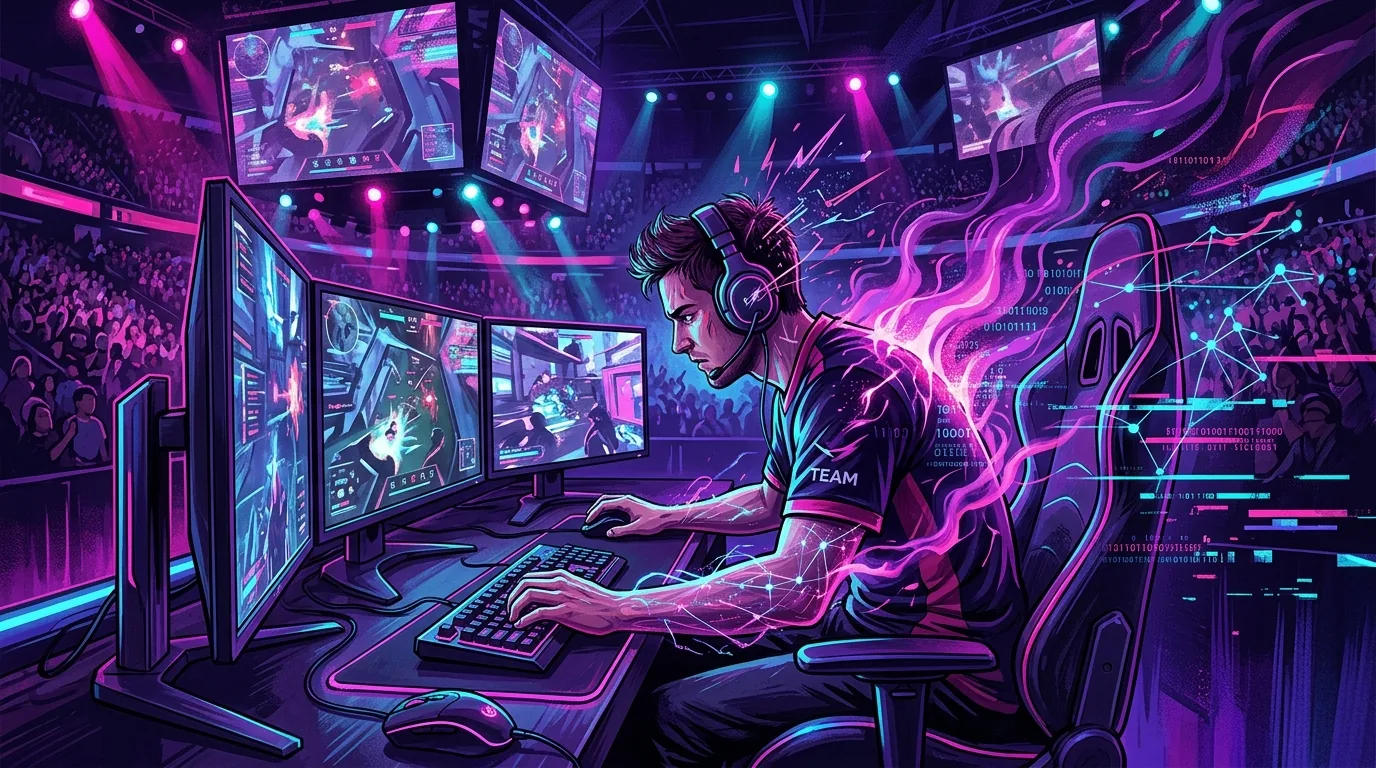
The Hidden Challenges Facing Elite Esports Athletes: What Science Says — illustrative featured image
The arena is silent, save for the frantic clatter of [mechanical keyboards](/blog/best-gaming-keyboards-2026-optical-vs-mechanical-a-buyer-s-guide). It is 3 AM in a cramped team house in Berlin. A 19-year-old, whose face is known to millions, stares at a respawn timer. His team just lost a Grand Final in a way that will be clipped and memed for months. He isn't thinking about the prize pool. He is thinking about the fact that his heart feels like it is trying to escape his ribcage, and that he hasn't slept more than four hours a night in three weeks. We love to talk about the glory. The million-dollar headshots, the stadiums full of screaming fans, the sponsorship deals. But the science is finally catching up to what players and their support staff have whispered for years: the lifestyle of an elite esports athlete is a physiological and psychological minefield. A recent performance study peeled back the curtain on these hidden challenges, and the findings are less about "twitch reflexes" and more about cortisol spikes, circadian rhythm chaos, and the crushing weight of digital fame. If you are grinding ranked queues right now, or coaching a semi-pro team, this isn't just academic navel-gazing. These are the invisible debuffs that are keeping you from leveling up. ### The Body Is Not a CPU Here is the first myth we need to shatter: esports is not a purely mental game. The study highlighted that elite players exhibit cardiovascular stress markers comparable to race car drivers during high-stakes matches. Your body does not know the difference between fighting a dragon in the finals and being chased by a predator. It dumps adrenaline and cortisol into your bloodstream. The problem? Most esports athletes train for the cognitive load, but they completely ignore the physical response. - **Heart Rate Spikes:** During clutch moments, heart rates can hit 160-180 BPM. This impairs fine motor control and decision-making. - **Breath Holding:** Players unconsciously hold their breath during tense moments, leading to oxygen debt in the brain. - **Static Posture:** Sitting for 10-14 hours a day leads to anterior pelvic tilt and reduced blood flow to the lower body, which actually slows reaction time due to reduced circulatory efficiency. The practical takeaway here is brutal but simple: if you cannot control your physiological arousal, you will choke. It is not about being "lazy" or "unfit." It is about training your nervous system to handle the pressure. As [orgs must teach soft skills](/blog/esports-player-behavior-why-orgs-must-teach-soft-skills-for-long-term-success) for long-term success, this physiological training is just as critical. ### The Social Media Toxicity Loop The study didn't just look at in-game metrics; it looked at the digital ecosystem surrounding the players. This is where the esports mental health crisis gets ugly. Elite players are not just competing against the enemy team. They are competing against a firehose of chat logs, Reddit threads, and Twitter replies. The research suggests that the constant exposure to public scrutiny creates a state of "hyper-vigilance." Players check their mentions after a loss as a form of self-flagellation. This activates the same neural pathways as physical pain. Consider the specific stressors that are unique to esports athletes: 1. **Permanent Performance Review:** Every mistake is logged, clipped, and analyzed by thousands of viewers. A footballer can hide a bad pass; an esports player has their mouse clicks replayed in slow motion. 2. **The "Solo Queue" Grind:** Even when not in official matches, players are expected to stream or grind ranked mode. This removes the concept of "off time." Home is the office. 3. **Identity Fusion:** When your in-game rank is tied to your self-worth, a losing streak is not just a bad day. It is an existential crisis. The science points to a specific danger: the "always-on" nature of the sport prevents the brain from entering a restorative state. You cannot recover from stress if you are constantly re-exposing yourself to the source of that stress. The principles of performance psychology [from VCT to EWC](/blog/from-vct-to-ewc-sideshow-s-insights-on-esports-principles-and-prodigies) show that managing this external noise is essential for consistency. ### Sleep: The Ultimate Performance Enhancer (That Everyone Ignores) We have heard it a million times, but the study quantifies it in a scary way. The average elite esports athlete sleeps roughly 6 hours and 40 minutes per night. However, their sleep onset latency (the time it takes to fall asleep) is significantly delayed. Why? Because the blue light from monitors and the adrenaline from late-night matches disrupt melatonin production. But here is the kicker: the study found that sleep efficiency is directly correlated with in-game accuracy. Players who slept less than 7 hours showed a measurable decrease in "cognitive flexibility," which is the ability to adapt to an opponent's changing strategy mid-match. The hidden challenge here is scheduling. Most esports organizations structure scrims in the afternoon and evening to maximize viewership for streams. This forces players into a nocturnal cycle that fights their natural biology. It is a systemic issue, not just a personal discipline issue. ### The "What We Recommend" Section The study outlines the problems, but it doesn't offer a clear path forward. So, we are going to give you our opinionated, practical guide based on the data. If you are serious about longevity in this sport, you need to treat your body like a high-end peripheral. You wouldn't use a dusty mouse with a frayed cord. Why are you running your brain on fumes? **Our Take: The Non-Negotiables** - **Invest in a Whoop or Oura Ring:** We hate subscription fees as much as anyone, but you need data. Tracking your HRV (Heart Rate Variability) tells you if you are recovered enough to play at your peak. If your HRV is low, skip the ranked grind. You are just going to lose MMR and stress yourself out further. It is the best way to prevent burnout before it happens. - **Walk Away from the Screen (Literally):** The study emphasizes the need for "active recovery." Do not watch replays on your off day. Go for a 30-minute walk outside. The combination of sunlight (to reset your circadian rhythm) and low-intensity movement does more for your reaction time than an extra hour of Aim Lab. - **Try a "Tech Shabbat":** For one hour before you sleep, put your phone in another room. We know, streaming is your job. But you need to break the dopamine loop. Read a physical book. The study shows that the blue light from phones is worse than the monitor because it is closer to your face and disrupts the sleep cycle more aggressively. - **Consider a Cognitive Behavioral Therapist (CBT):** Specifically, one who understands performance anxiety. This is not a "weakness" move. The study found that players who utilized CBT techniques showed higher resilience to tilt. They learn to reframe the "threat" of a Grand Final as a "challenge." That reframing lowers cortisol spikes. ### The Danger of "Grit" There is a popular narrative in esports that you have to "grind until you make it." The study cautions against this. There is a distinct difference between "deliberate practice" (which is focused and time-boxed) and "mindless grinding" (which is playing until you are numb). The hidden challenge is that the esports ecosystem rewards the latter. Organizations want to see hours logged. Fans want to see dedication. But the science shows that after a certain threshold (often around 5-6 hours of high-intensity focus), the brain stops learning. You are just reinforcing bad habits and building up fatigue. The elite players who sustain long careers are not the ones who play the most. They are the ones who play the most *efficiently*. They take breaks. They analyze their own gameplay with a clear head, rather than tilting into a 10-hour solo queue session that drops them two ranks. ### The Financial Insecurity Factor We cannot talk about esports athlete challenges without mentioning the money. The study touched on the discrepancy between the top 1% of earners and the rest of the professional scene. Many players in Tier 2 and Tier 3 leagues are living on stipends that barely cover rent. This financial stress is a major contributor to mental health issues. Players are terrified of being benched because they cannot afford to go home. They are playing with a "contract year" mentality every single match. This fear inhibits risk-taking in-game, leading to passive, scared play that fans hate. It is a vicious cycle. The science suggests that psychological safety is a prerequisite for peak performance. If you are worried about eviction, you cannot execute a complex macro strategy. Health and safety concerns, like those seen in the [PUBG Mobile World Cup food poisoning incident](/blog/pubg-mobile-world-cup-food-poisoning-incident-health-and-safety-in-esports), highlight how external stressors directly impact competitive output. ### The Path Forward The study is a wake-up call, but not a doom-and-gloom prophecy. It simply confirms that we have been looking at performance wrong. We assumed that if you practiced more, you would win more. The reality is that if you recover better, you win more. The next generation of esports athletes needs a support system that goes beyond a coach who analyzes VODs. They need nutritionists, physical therapists, and psychologists. The organizations that figure this out first will have an unfair advantage. The ones that don't will keep burning through talent, wondering why their star players "randomly" retire at 22. For the individual player reading this, the message is simple: take the science seriously. Your mental health is not a secondary concern to your K/D ratio. It is the operating system that runs the entire game. If you crash, nothing else matters. Prioritize sleep. Manage your anxiety. Step away from the screen. The meta has shifted. --- ## FAQ **Q: How many hours a day should a professional esports player actually train?** A: Based on the performance data, high-quality, focused practice is optimal at around 4 to 6 hours daily. Beyond that, cognitive fatigue sets in, making additional hours counterproductive and increasing the risk of repetitive strain injuries. **Q: Can meditation actually improve my gameplay, or is it just hype?** A: It is not hype. The science indicates that brief mindfulness sessions lower baseline cortisol levels. This helps you maintain a calmer heart rate during high-pressure moments, which directly preserves your fine motor control and reaction speed in clutch scenarios. **Q: What is the first sign of esports burnout I should look out for?** A: The earliest indicator is usually a loss of "flow." If you find that you are no longer enjoying the process of winning, or you feel irritable and restless during loading screens, your brain is signaling fatigue. Do not ignore it by playing more. That is the worst thing you can do.

Frequently asked questions

Q: How many hours a day should a professional esports player actually train?

A: Based on the performance data, high-quality, focused practice is optimal at around 4 to 6 hours daily. Beyond that, cognitive fatigue sets in, making additional hours counterproductive and increasing the risk of repetitive strain injuries.

Q: Can meditation actually improve my gameplay, or is it just hype?

A: It is not hype. The science indicates that brief mindfulness sessions lower baseline cortisol levels. This helps you maintain a calmer heart rate during high-pressure moments, which directly preserves your fine motor control and reaction speed in clutch scenarios.

Q: What is the first sign of esports burnout I should look out for?

A: The earliest indicator is usually a loss of "flow." If you find that you are no longer enjoying the process of winning, or you feel irritable and restless during loading screens, your brain is signaling fatigue. Do not ignore it by playing more. That is the worst thing you can do.

The Body Is Not a CPU Here is the first myth we need to shatter: esports is not a purely mental game. The study highlighted that elite players exhibit cardiovascular stress markers comparable to race

**Our Take: The Non-Negotiables**