
GamesNFans logo GamesNFans

Krafton's India Bet: $500M for BGMI and Esports

Krafton's India bet hits $500 million for AI, robotics, and homegrown studios. See what it means for BGMI players and the esports scene. Click to read more.
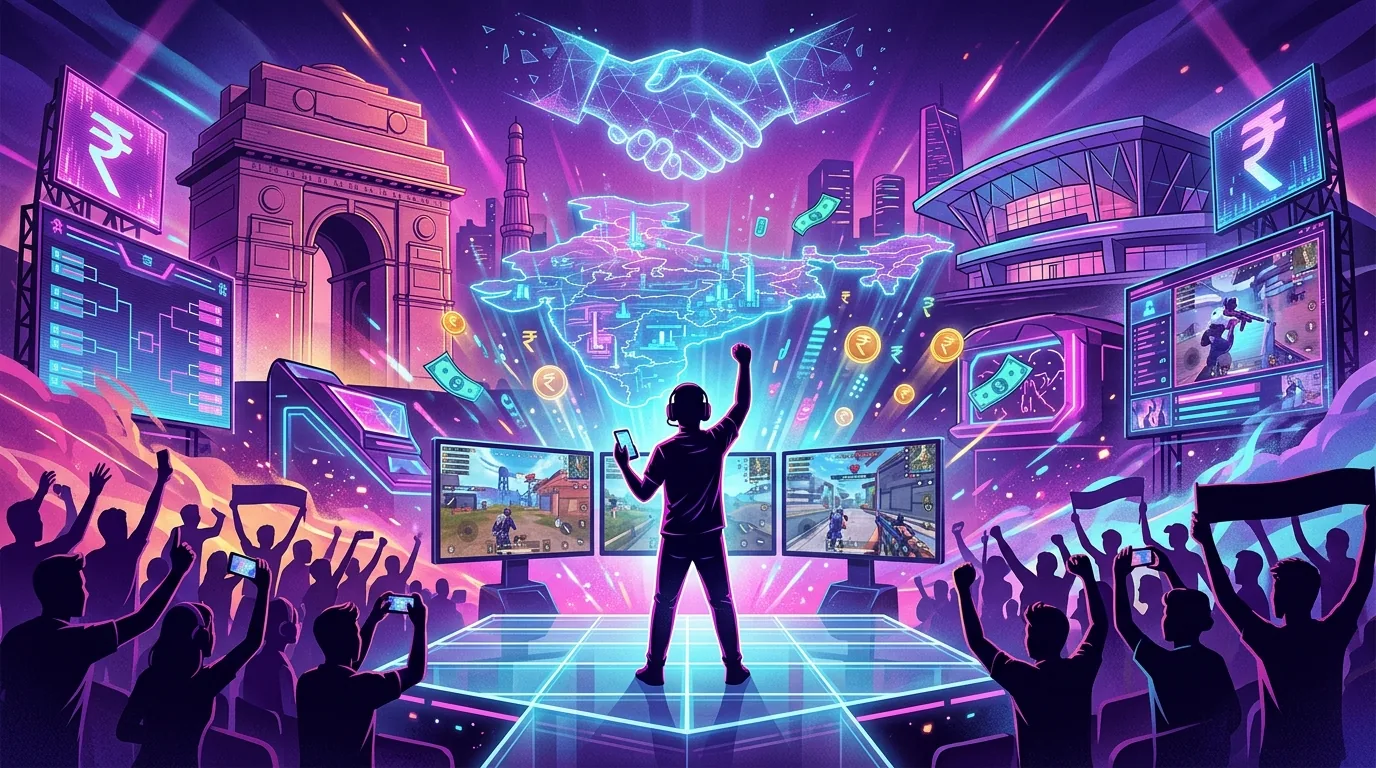
Krafton's $500M India Bet: What It Means for BGMI Players and the Esports Scene — illustrative featured image
The last time Krafton made headlines this loud in India, it was because BGMI had just vanished from app stores, leaving millions of players staring at a blank screen and a “server maintenance” message that felt like a breakup. That was 2022. The game came back, then hit 100 million registered users again, and now the South Korean publisher is doing something that makes those old regulatory headaches look like a speed bump on a highway. Krafton is doubling down on India to the tune of $500 million. Not a rumor, not a “strategic evaluation.” The company confirmed plans to push its total India investment to half a billion dollars, with fresh capital aimed at AI, robotics, and, crucially, homegrown game studios. For BGMI players and anyone watching the [Indian esports](/blog/valorant-game-changers-how-to-follow-and-support-women-s-esports-in-india) scene, this is the kind of news that deserves more than a passing glance. It changes the math. ## What the $500 Million Actually Buys Let’s be clear about scale. Krafton has already poured around $250 million into Indian startups and gaming ventures since 2021. That money went into companies like [Nodwin Gaming](/blog/how-to-watch-bgmi-masters-series-season-5-schedule-teams-and-streaming-on-kick), Loco (the streaming platform), and various mobile gaming studios. The new commitment doubles that figure. But the interesting part is not the raw number. It is where the money is pointed. The company has said the next phase will focus on three pillars: - **AI and deep tech**: Think anti-cheat systems, player behavior modeling, and possibly generative tools for game development. - **Robotics**: This sounds odd for a gaming company, but Krafton has been quietly investing in robotics startups globally. In India, this could mean automation for logistics or even physical esports infrastructure. - **Homegrown game studios**: This is the big one. Krafton wants to fund and support Indian developers making games for the Indian market, not just localized versions of Korean titles. For BGMI specifically, the AI investment is the sleeper hit. Cheating has been a persistent plague in the Indian mobile shooter scene. Every ranked season, you see clips of players getting lasered through walls by someone with a suspiciously perfect aimbot. Krafton’s anti-cheat team has banned accounts in waves, but the problem keeps evolving. More investment in AI-driven detection means faster bans, better matchmaking integrity, and a ranked ladder that actually means something. ## The BGMI Future: More Than Just Survival Here is the uncomfortable truth that most coverage skips: BGMI has been in a kind of limbo. It is playable, it is popular, and it prints money through in-game purchases. But the game has not had the kind of massive content updates that its global PUBG Mobile counterpart gets on a regular basis. Indian players have noticed. The esports circuit, while active, has felt cautious, almost like everyone is waiting for the other shoe to drop. Krafton’s new investment changes that narrative. When a publisher commits $500 million to a region, they are not planning to maintain the status quo. They are planning to build. What does that mean for BGMI players? A few concrete things: - **More frequent and larger in-game events**: Krafton will want to show Indian players that the market is a priority, not an afterthought. - **Server infrastructure improvements**: Lower ping, fewer crashes during peak hours, and better handling of the massive concurrent player counts during tournaments. - **A clearer roadmap for competitive play**: If Krafton is serious about homegrown studios, they will also want a sustainable esports ecosystem to showcase those games. There is also the possibility of BGMI-specific content. India has a rich visual culture, and we have already seen themed crates and outfits tied to Indian festivals. Expect more of that, but with actual gameplay integration, not just cosmetic cash grabs. ## India Esports Growth: The Structural Shift Let’s talk about the esports ecosystem, because this is where the investment gets genuinely exciting. India has the player base. The country consistently ranks among the top markets for mobile gaming downloads. What it lacks is the professional infrastructure. Prize pools are smaller than they should be. Team salaries are modest. Tournament organizers often run events on thin margins, hoping that viewership numbers will eventually attract bigger sponsors. Krafton’s $500 million bet is designed to fix that gap. By funding Nodwin Gaming and similar entities, they are effectively subsidizing the competitive scene until it can stand on its own. This is not charity. It is market building. Here is what a healthier [Indian esports](/blog/drx-and-nuon-how-indonesia-korea-deals-are-shaping-esports-in-asia) scene looks like in practical terms: | Current State | With Krafton’s Full Investment | | --- | --- | | A few big tournaments per year | A structured circuit with multiple tiers | | Top teams struggle to find sponsors | Brand-safe, well-run leagues attract mainstream advertisers | | Streaming talent relies on foreign platforms | Homegrown platforms like Loco get capital to compete | | Players often juggle jobs and practice | Full-time contracts become viable for top talent | The ripple effect matters too. When Indian teams perform well internationally, it validates the investment. When the global esports calendar includes Indian stops, it brings foreign money into the local economy. None of that happens without the kind of capital commitment Krafton just announced. This is part of a broader boom that has seen [India's esports scene grow rapidly](/blog/from-cs-go-to-bgmi-how-india-s-esports-scene-is-booming), with more players and organizations entering the fray every year. ## New Game Development: The Homegrown Push The phrase “homegrown game studios” is doing a lot of work in that announcement. Let’s unpack it. India has no shortage of talented developers. The country produces some of the best engineers and artists in the world, many of whom work on AAA titles for Western and Asian studios without ever getting credit for it. The problem has always been the lack of a domestic publishing ecosystem. You can build a great game in Bengaluru, but if there is no local publisher willing to take a risk on it, that game either dies on a app store page or gets sold to a foreign company for pennies. Krafton wants to change that by acting as both investor and publisher. They have already backed several Indian studios through their incubation programs. The new money will accelerate that process. What kinds of games should we expect? Realistically, the first wave will be mobile-first titles, simply because that is where the Indian audience lives. But there is room for PC and console experiments too, especially if they target the growing number of Indians who own gaming PCs and next-gen consoles. A lighter alternative like [BGMI Lite](/blog/bgmi-lite-release-date-features-and-how-it-compares-to-bgmi) could also benefit from this push, as it targets players with lower-end devices. The genres that make sense: - **[Battle royale](/blog/can-you-play-bgmi-lite-on-pc-exploring-your-options) and extraction shooters**: The BGMI audience is already trained for this. - **Sports games**: Cricket is the obvious one, but football and kabaddi have massive followings too. - **Mythology and folklore-based RPGs**: Indian epics are a treasure trove of stories that have never been properly explored in interactive form. ## Our Take: What Krafton Should Do First We have opinions, and we are not shy about them. Here is what we would prioritize if we were sitting in Krafton’s Seoul headquarters with that $500 million burning a hole in our pocket. **First, fix the BGMI competitive calendar.** The game needs a year-round league, not sporadic tournaments. We recommend a three-split system similar to what Riot does with Valorant. Each split ends with a LAN event in a different Indian city. This gives players a reason to grind, teams a reason to invest, and fans a reason to stay engaged. **Second, fund a proper talent pipeline.** India has incredible raw mechanical skill, but the gap between a top-ranked random player and a professional is coaching, teamwork, and mental preparation. Krafton should partner with existing esports organizations to run bootcamps and scouting combines. Find the next superstar in a tier-2 city and give them a path to the stage. This is especially critical given how [tier 2 esports teams struggle financially](/blog/the-real-cost-of-pro-gaming-why-tier-2-esports-teams-are-struggling-financially) without proper support structures in place. **Third, build the robotics thing into something real.** This sounds like a joke, but hear us out. Krafton has been working on robots that can physically play games, like their AI that mastered the mobile game “Bird on a Wire.” Imagine a live event where a robot arm is physically tapping a phone screen to compete against a human pro. That is the kind of spectacle that gets mainstream attention and makes people talk about esports who normally would not care. ## What This Means for You If you are a BGMI player, this news is unambiguously good. More investment means a better game, a more stable competitive scene, and more opportunities to make a career out of something you love. If you are just a fan of [Indian gaming](/blog/earn-while-you-play-how-students-are-getting-paid-for-gaming-and-how-you-can-too), it means the content you consume will get better, the events will get bigger, and the talent you cheer for will get the support they deserve. The $500 million number is impressive, but the real test is execution. Krafton has made big promises before. This time, they have put real money behind it. Now we watch to see if they deliver. ## FAQ ### Will BGMI get more frequent updates because of this investment? Yes, that is the expectation. Krafton’s increased focus on India should lead to more resources allocated to the BGMI version, including content updates, server improvements, and anti-cheat technology. The exact timeline depends on internal priorities, but the direction is positive. ### How will this investment affect Indian esports players financially? The investment should lead to larger prize pools, more stable team salaries, and increased sponsorship opportunities as the ecosystem professionalizes. Krafton’s backing of local tournament organizers is designed to create a sustainable circuit where players can earn a living. ### Are there any risks to this investment plan? The main risk is regulatory. India’s stance on foreign investment in gaming has been unpredictable, as the BGMI ban demonstrated. Krafton has navigated these waters before, but future policy shifts could slow down their plans. Another risk is execution, as not every investment in game development leads to a hit title. ## Sources - [Krafton (Wikipedia)](https://en.wikipedia.org/wiki/Krafton)

Frequently asked questions

Will BGMI get more frequent updates because of this investment?

Yes, that is the expectation. Krafton’s increased focus on India should lead to more resources allocated to the BGMI version, including content updates, server improvements, and anti-cheat technology. The exact timeline depends on internal priorities, but the direction is positive.

How will this investment affect Indian esports players financially?

The investment should lead to larger prize pools, more stable team salaries, and increased sponsorship opportunities as the ecosystem professionalizes. Krafton’s backing of local tournament organizers is designed to create a sustainable circuit where players can earn a living.

Are there any risks to this investment plan?

The main risk is regulatory. India’s stance on foreign investment in gaming has been unpredictable, as the BGMI ban demonstrated. Krafton has navigated these waters before, but future policy shifts could slow down their plans. Another risk is execution, as not every investment in game development leads to a hit title.