Games Invented in India: Chess, Ludo, Snakes and More
Games invented in India include chess (from chaturanga), snakes and ladders, Ludo (from Pachisi), kabaddi and kho kho. Learn where each began and spread.
Games invented in India are played in almost every country today, often under new names. Chess grew out of an Indian game called chaturanga, snakes and ladders began as a moral lesson called Moksha Patam, and Ludo is a simplified version of the Indian board game Pachisi. Add kabaddi, kho kho and a few backyard classics, and you have a list most people are surprised by.
## Chess: from chaturanga to the world
Most historians trace chess back to **chaturanga**, a game played in India by around the 6th century CE, during or just after the Gupta period. The name means "four limbs" and refers to the four divisions of an ancient army: infantry, cavalry, elephants and chariots. Those became the pawns, knights, bishops and rooks you know today.
From India the game travelled to Persia, where it became shatranj, and then through the Arab world into Europe. Along the way the pieces changed shape and some moves changed. The queen, for example, was once a much weaker piece. The [Chaturanga](https://en.wikipedia.org/wiki/Chaturanga) entry gives a good summary of how scholars piece this history together.
India's link with chess is still strong. Viswanathan Anand became India's first grandmaster in 1988 and went on to become world champion, and today India produces a steady stream of young grandmasters. Many children of Indian families abroad pick up the game at school chess clubs and are delighted to learn where it began.
## Snakes and ladders: a game about good and bad deeds
**Snakes and ladders** started life in India as a game with a lesson. Known as Moksha Patam, and in a related form as gyan chaupar ("game of knowledge"), it used a board where ladders stood for virtues such as generosity and humility, and snakes stood for vices such as anger and theft. Reaching the top square meant reaching moksha, or spiritual liberation.
Versions of the game were linked to Hindu, Jain and Sufi ideas. Boards were often hand-painted with gods, animals and people. The game reached Britain in the 1890s, where it lost most of its religious meaning and became a simple race for children. In the United States it is often sold as Chutes and Ladders. You can read more on the [Snakes and ladders](https://en.wikipedia.org/wiki/Snakes_and_ladders) page.
A nice detail if you play with kids: traditional boards had more snakes than ladders, a reminder that doing good is harder than going wrong.
## Ludo and Pachisi: the royal cross-and-circle game
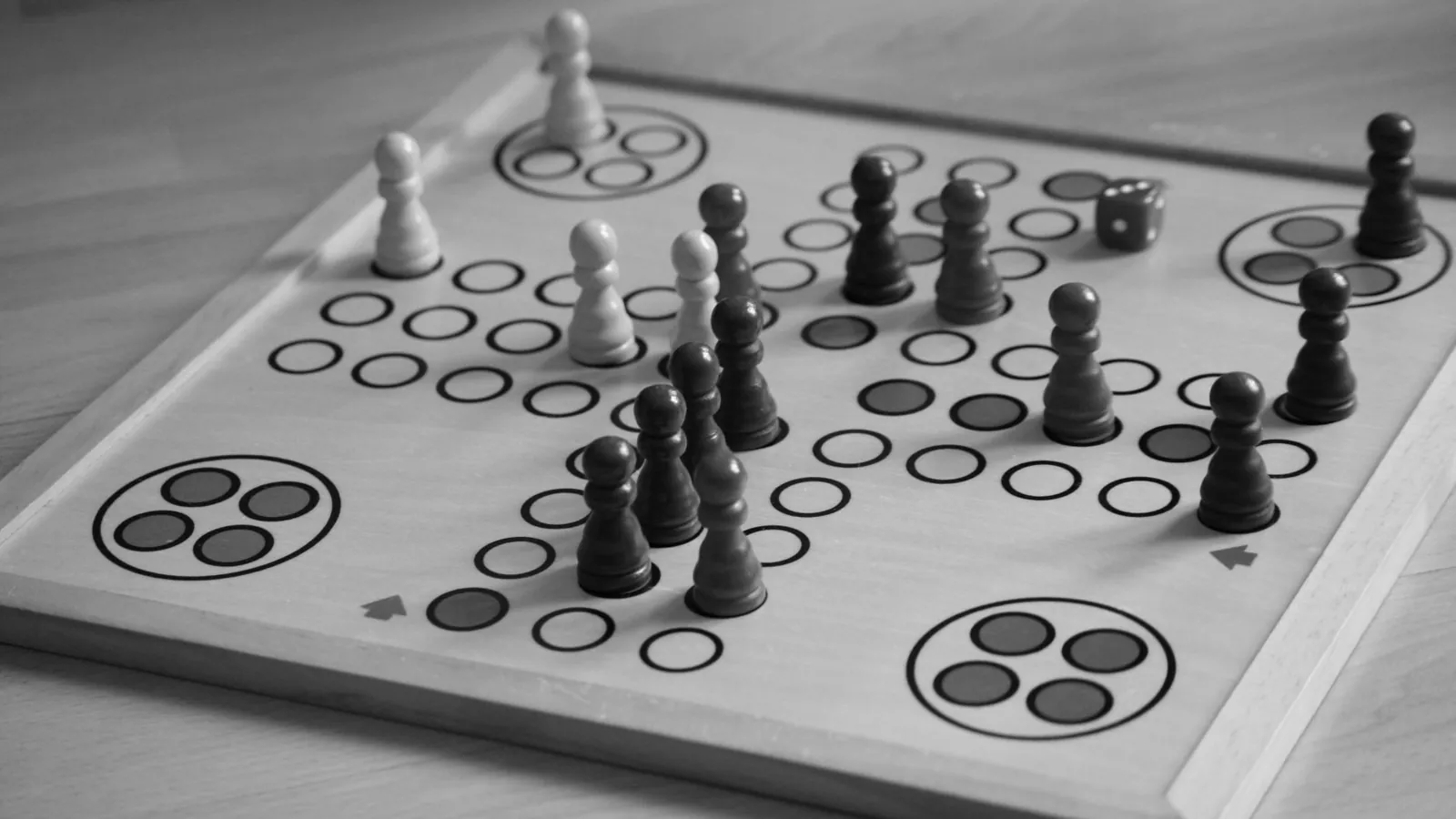
**Pachisi** is a cross-shaped race game that has been played in India for centuries. Players move pieces round the board according to throws of cowrie shells, trying to get all their pieces home before their opponents. The name comes from the Hindi word for twenty-five, the highest throw.
The Mughal emperor Akbar is often linked with the game in popular stories, which describe life-size courtyard boards where people acted as the pieces. Treat those stories as tradition rather than firm history.
In England, a simplified version using a cube die was marketed as **Ludo** in 1896. In North America a version was sold as Parcheesi. Today Ludo has come full circle: it is one of the most played casual games on phones across India, and many families abroad play it on video calls with relatives back home. The [Pachisi](https://en.wikipedia.org/wiki/Pachisi) page explains how the two games connect.
## Which outdoor sports came from India?
Board games are only half the story. Several team sports have Indian roots too.
**Kabaddi** is a contact sport played on a small court. A "raider" crosses into the opposing half, tries to tag defenders and get back, all while holding a single breath and chanting "kabaddi, kabaddi". It has been part of the Asian Games since 1990, and gained a big new audience after the Pro Kabaddi League began in 2014. See the [Kabaddi](https://en.wikipedia.org/wiki/Kabaddi) page for the rules in detail.
**Kho kho** is a fast chasing game. One team sits in a line, facing alternate directions, while chasers try to tag the defenders of the other team. A seated player can only join the chase after being tagged from behind with the call "kho". The first [Kho Kho World Cup](https://en.wikipedia.org/wiki/2025_Kho_Kho_World_Cup) was held in New Delhi in January 2025, and India won both the men's and women's titles, beating Nepal in each final.
**Polo** in its modern form owes a lot to Manipur in north-east India, where a horseback stick-and-ball game called sagol kangjei has a long history. British officers and tea planters picked it up in the 19th century, set up clubs, and wrote the rules that spread around the world.
**Badminton** has an Indian connection too. British army officers played it in the garrison town of Poona (now Pune), where early rules were drawn up in the 1870s. The game took its modern name from Badminton House in England. Its roots in shuttlecock games are older and spread across Asia, so it is fairer to call it a game shaped in India than invented there.
## What traditional games do Indian children still play?
Beyond the famous exports, Indian streets and courtyards have their own classics. Many grandparents will know these:
| Game | What it is | Where you hear the name |
|---|---|---|
| Gilli-danda | Hit a small wooden peg (gilli) into the air with a stick (danda) and strike it as far as you can | Across north and central India |
| Lagori (pitthu) | Knock down a stack of flat stones with a ball, then rebuild it before you are tagged | Karnataka, Maharashtra and the north |
| Pallanguzhi | A mancala-style board game of sowing and capturing seeds or shells | Tamil Nadu and Kerala |
| Kancha | Marbles, played with flicks of the finger | Across India |
| Antakshari | A singing game where each song must start with the last letter of the previous one | Family gatherings everywhere |
These games need almost no equipment, which is why they have lasted. They are also an easy way to share a bit of India with children growing up abroad. A chalk court for lagori or a few marbles is all you need.
If your family enjoys this kind of thing, you might also like our [India quiz for kids](/blog/india-quiz-for-kids), which has 40 easy questions that work well on a weekend afternoon.
## Turning the history into a family game
Here is a simple idea for a family evening. Set up three stations: a chessboard, a snakes and ladders board and a Ludo board. At each one, someone reads a short fact from this article before the game starts. Children remember facts much better when they are attached to something they are playing.
You can also turn it into a quiz night. India's Ministry of External Affairs runs the [Bharat Ko Janiye Quiz](https://bkjquiz.com/?utm_source=dgamaf53&utm_medium=paid_search&utm_id=d53), its official quiz about India. It is free to join and open to everyone worldwide, so friends who are not Indian can join in too.
For more question-and-answer fun, our [India trivia facts](/blog/india-trivia-facts) list has 60 facts that often surprise even people who grew up in India.
## Quick recap: games with Indian roots
- **Chess** comes from chaturanga, played in India by around the 6th century CE.
- **Snakes and ladders** began as Moksha Patam and gyan chaupar, games about virtue and vice.
- **Ludo** is a simplified, die-based version of Pachisi, marketed in England in 1896.
- **Kabaddi** and **kho kho** are Indian team sports, both now played internationally.
- **Modern polo** grew from Manipur's sagol kangjei, and **badminton** took shape in Poona.
Next time someone sets up a chessboard or opens a Ludo app, you will have a good story to tell about where it all started.
## Related on this site
- [CS2 vs VALORANT in 2026: Which Tactical FPS Should You Watch and Play?](/blog/cs2-vs-valorant-in-2026-which-tactical-fps-should-you-watch-and-play)
- [PlayStation vs Xbox vs Nintendo in 2026: Which Console Should You Buy?](/blog/playstation-vs-xbox-vs-nintendo-in-2026-which-console-should-you-buy)
- [7 Meta Cards That Will Boost Your EA FC 27 Ultimate Team](/blog/7-meta-cards-that-will-boost-your-ea-fc-27-ultimate-team)
 GamesNFans