How to Get Started in Esports at Your School (2026)
A six-step plan to launch a school esports club: pick a game, get sign-off, kit the room, and join a league. Costs, pitfalls, and our picks inside.
# Esports in Schools: Benefits, Clubs, and How to Get Started
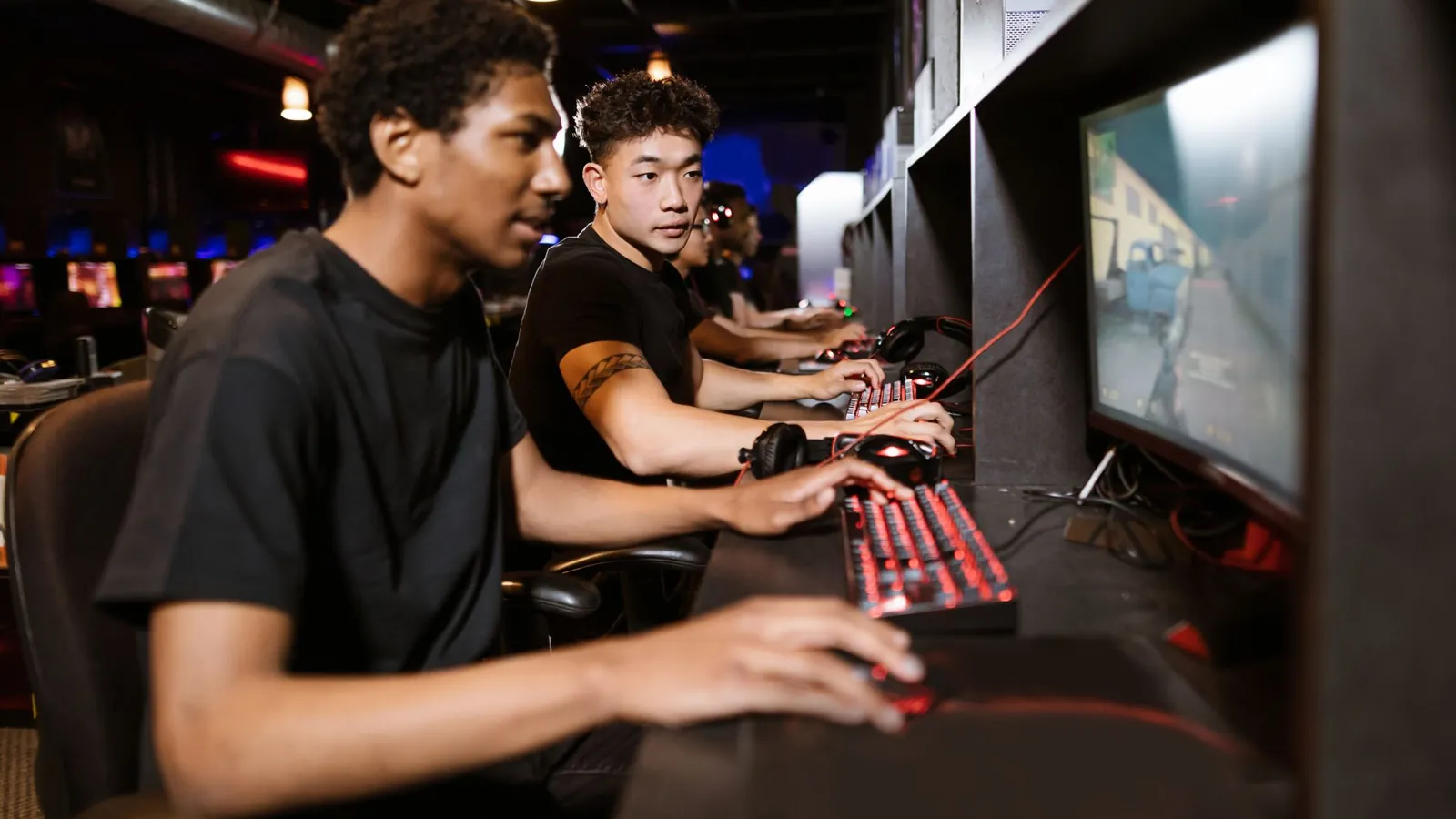
The bell rings at 3:15 on a Tuesday, and half the Year 10 class doesn't move. They're not ignoring the teacher. They're watching two students from the rival school clutch a 5v5 in [Rocket League](/blog/esports-world-cup-2026-complete-guide-to-events-games-and-how-to-watch), streamed to a projector at the front of the library. The head of PE is refereeing. The IT technician is on standby. This is a school esports club in 2026, and it is nothing like the picture most parents still have in their heads.
If you're a student, a teacher, or a parent who has been asked to "sort out a gaming club," here's the good news: **[how to get started in esports](/blog/fncs-2026-why-fortnite-esports-is-bigger-than-ever-and-how-to-get-started)** at a school is easier than you think. You can have a functioning club running inside four to six weeks, with a budget under $300, and a competition schedule that fits around homework. Below is the full playbook, including the bits that go wrong.
## What esports in school actually means
Let's kill the confusion first. **What is esports in high school?** It's organised [competitive gaming](/blog/how-to-become-an-esports-player-a-step-by-step-guide), usually in teams, usually against other schools, usually in games with a low barrier to entry: Rocket League, Overwatch 2, Valorant, Super Smash Bros., Mario Kart, EA FC. It is not a free-for-all LAN party. There are rules, fixtures, and a coach or staff supervisor.
**[What is esports](/blog/720hz-gaming-monitor-for-esports-is-it-worth-buying-in-india) in middle school?** Same idea, softer edges. Most middle school programmes run in-school ladders and friendly scrims rather than national leagues, because age verification rules on the big platforms are stricter. Nintendo titles and Rocket League dominate here.
**What is an esports club in high school?** The club is the container. It's the weekly meeting, the Discord server, the roster, the kit. The league is what the club enters. You need the club before you need the league.
## Why esports in schools is a good thing (the honest case)
We're not going to pretend every kid who plays Valorant is going to go pro. Almost none will. That's fine. The case for **why esports in schools is a good thing** rests on something more boring and more useful:
- **Attendance and belonging.** Kids who skip football practice will turn up for a Tuesday scrim. That's a hook into school life for students who otherwise drift.
- **Soft skills that transfer.** Comms discipline, calling plays, reviewing footage, taking a loss without tilting. A team captain doing a VOD review is doing the same job as a cricket captain doing a post-match debrief.
- **STEM adjacency.** Networking, PC builds, streaming setup, latency troubleshooting. Our Gear & Setup readers know how much of this is real technical skill.
- **It's cheap relative to traditional sport.** A school cricket or rugby programme runs into thousands. A Rocket League setup runs on hardware the school already owns.
The counterargument, that gaming isolates, is now measurably wrong in a club context. The isolation happens when kids play alone in a bedroom. The club is the antidote.
## How to get started in esports at your school: the 6-step plan
Here's the decision path. Follow it in order. Skipping steps is how clubs die in week three.
### Step 1: Find your staff champion (week 1)
**Action:** Identify one member of staff willing to supervise. Not necessarily a gamer. Willing is enough.
**Result:** You have a legal adult in the room, which is the single requirement every school admin will ask about first.
**What goes wrong:** You get a teacher who loves the idea but has no time. The club runs for a month and collapses. Test commitment by asking them to attend two sessions before you announce anything.
### Step 2: Pick one game, not five (week 1-2)
**Action:** Choose a single title for the first term. Rocket League is the safest pick in the US, UK and Europe: free to play, cross-platform, age-appropriate, and every school has the hardware to run it.
**Result:** A clear identity. "The Rocket League club" recruits better than "the gaming club."
**What goes wrong:** You try to run Valorant, Smash and FIFA at once. Rosters fragment, the supervisor burns out, and nobody improves.
### Step 3: Get permission in writing (week 2-3)
**Action:** Write a one-page proposal covering: supervisor name, meeting time, game, equipment, safeguarding policy, and parental consent process. Hand it to the head or activities coordinator.
**Result:** You exist officially. This unlocks rooms, budgets, and the school's insurance.
**What goes wrong:** You start meeting before approval. One complaint from a parent about "a gaming club" and you're shut down mid-term. Get the paper first.
### Step 4: Kit out the room (week 3-4)
**Action:** Inventory what you have. Most schools already own laptops or consoles. Add what's missing.
| Item | Typical cost (USD) | Notes |
|---|---|---|
| 5 x wired controllers | $150 | Cheaper and more durable than wireless for club use |
| Network switch + cabling | $60 | Wired beats school Wi-Fi every time |
| Headsets (5-pack) | $120 | Comms discipline starts here |
| Rocket League | $0 | Free to play |
| Tournament entry (school league) | $0 to $150 per team | Varies by league and region |
**Result:** A playable room for under $350 in most cases.
**What goes wrong:** You rely on the school's guest Wi-Fi. Latency spikes to 200ms and the club loses every scrim. Wire it.
### Step 5: Join a school league (week 4-5)
**Action:** Register with a schools competition body. In the US, PlayVS and NASEF are the main routes. In the UK, British Esports runs the Schools Championships. Across Europe, national federations (Germany's ESBD, France's France Esports) list school pathways.
**Result:** Fixtures. A reason to practise. A scoreboard.
**What goes wrong:** You register a roster before confirming eligibility rules (age, residency, school enrolment). Teams get disqualified for admin errors, not skill.
### Step 6: Run the first session and review it (week 5-6)
**Action:** 90 minutes. 20 minutes warm-up, 40 minutes scrim, 20 minutes VOD review, 10 minutes admin. Repeat weekly.
**Result:** A habit. By week eight you have a settled roster and a waiting list.
**What goes wrong:** No structure. Kids drift in and out, the supervisor becomes a babysitter, and the club becomes a hangout rather than a team.
## Our take: what we'd actually do
If you're starting from zero, here's our recommendation. Pick **Rocket League** as your first title. Register with **PlayVS** if you're in the US or **British Esports** if you're in the UK, because both have published safeguarding frameworks that make the school sign-off painless. Buy five wired **Xbox** or **PowerA** controllers rather than letting students bring their own, because shared kit avoids arguments and breakage claims. And appoint a student captain in week one, not week six, because a club with a student face recruits twice as fast as one fronted by a teacher.
If your school won't budge on a formal club yet, don't force it. Run a lunchtime ladder for one term, keep a log of attendance, and take that data to the head. Numbers change minds faster than arguments.
## The one thing that sinks most school esports clubs
It isn't money. It isn't hardware. It's the supervisor leaving. Build the club so it survives a staff change: written rules, a shared drive, a named deputy, and a fixture calendar that lives in the school system. Treat it like any other team. The schools that do this are still running clubs five years later. The ones that don't are the ones whose Discord server went quiet in November.
## FAQ
**Do you need expensive gaming PCs to start a school esports club?**
No. Rocket League, Mario Kart and Smash Bros. all run on hardware most schools already own. Start there and upgrade only when you have a settled roster.
**Can middle school students join competitive esports leagues?**
Some, yes, but rules vary by league and region. Most middle schools start with in-school ladders and friendly scrims before entering national competitions.
**How much does a school esports club cost to run?**
A basic setup (controllers, headsets, network cabling) lands around $300 to $350 in USD. League entry fees vary from free to about $150 per team per season.
Frequently asked questions
Do you need expensive gaming PCs to start a school esports club?
No. Rocket League, Mario Kart and Smash Bros. all run on hardware most schools already own. Start there and upgrade only when you have a settled roster.
Can middle school students join competitive esports leagues?
Some, yes, but rules vary by league and region. Most middle schools start with in-school ladders and friendly scrims before entering national competitions.
How much does a school esports club cost to run?
A basic setup (controllers, headsets, network cabling) lands around $300 to $350 in USD. League entry fees vary from free to about $150 per team per season.
 GamesNFans