Independence Day Quiz India: 30 Freedom Struggle Questions
An Independence Day quiz on India's freedom struggle: 30 questions from the 1857 revolt to 15 August 1947, with answers under each and a score table.
Independence Day in India falls on 15 August, the day in 1947 when British rule ended and India became a free nation. This Independence Day quiz walks through the freedom struggle in 30 questions, from the revolt of 1857 to the midnight speech in Delhi. Answers are in bold under each question, so you can test yourself or run it as a [family quiz](/blog/india-quiz-for-kids).
## How to play
Read each question and answer before you look. Give one point for each correct answer, and for two-part questions, ask for both parts. The questions get a little harder as you go.
If you are hosting a 15 August gathering abroad, split guests into two teams and alternate questions. It works well at community events, school assemblies and on video calls with relatives in India.
## Round 1: The day itself (questions 1 to 10)
**1. On what date did India become independent?**
**Answer: 15 August 1947.**
**2. Who became independent India's first Prime Minister?**
**Answer: Jawaharlal Nehru.**
**3. What is the name of Nehru's famous speech delivered to the Constituent Assembly at midnight on 14 to 15 August 1947?**
**Answer: "Tryst with Destiny".**
**4. At which monument in Delhi does the Prime Minister raise the national flag every Independence Day?**
**Answer: The Red Fort.**
**5. Which Act of the British Parliament created the two independent dominions of India and Pakistan?**
**Answer: The Indian Independence Act 1947.**
**6. Who was the last Viceroy of British India?**
**Answer: Lord Mountbatten.**
**7. Who was the first and only Indian to serve as Governor-General of independent India?**
**Answer: C. Rajagopalachari.**
**8. Which British lawyer chaired the commissions that drew the new borders in Punjab and Bengal?**
**Answer: Sir Cyril Radcliffe.**
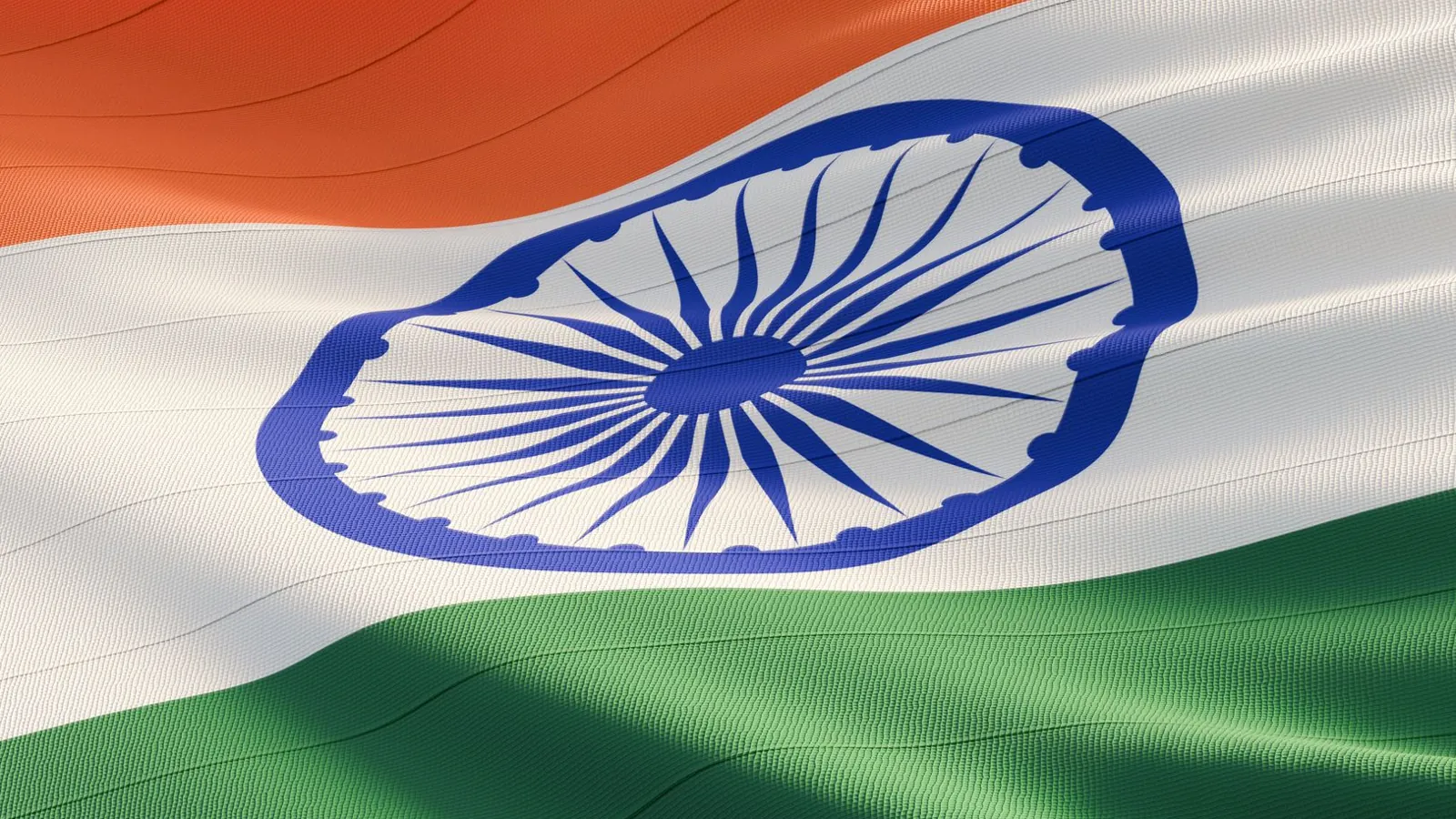
**9. How many spokes does the Ashoka Chakra on the national flag have?**
**Answer: 24.**
**10. On what date did the Constituent Assembly adopt the tricolour as the national flag?**
**Answer: 22 July 1947.**
The [Tryst with Destiny](https://en.wikipedia.org/wiki/Tryst_with_Destiny) page has the full text of question 3's speech, and the [Indian Independence Act 1947](https://en.wikipedia.org/wiki/Indian_Independence_Act_1947) page explains how the legal handover worked.
## Round 2: The early struggle, 1857 to 1919 (questions 11 to 18)
**11. Which soldier's act of defiance at Barrackpore in March 1857 is often remembered as an early spark of the revolt?**
**Answer: Mangal Pandey.**
**12. Which queen of Jhansi became one of the best-known leaders of the 1857 revolt?**
**Answer: Rani Lakshmibai.**
**13. In which year was the Indian National Congress founded?**
**Answer: 1885.**
**14. Who declared "Swaraj is my birthright, and I shall have it"?**
**Answer: Bal Gangadhar Tilak.**
**15. Who wrote "Vande Mataram", now India's national song?**
**Answer: Bankim Chandra Chattopadhyay (Chatterjee).**
**16. In which year did Mahatma Gandhi return to India from South Africa?**
**Answer: 1915.**
**17. Gandhi's first major satyagraha in India, in 1917, supported which group of farmers in Bihar?**
**Answer: Indigo farmers in Champaran.**
**18. On what date did the Jallianwala Bagh massacre take place in Amritsar?**
**Answer: 13 April 1919.**
## Why does 15 August mean so much to Indians abroad?
For many people of Indian origin living in other countries, Independence Day is the one day of the year when the whole community gathers. Flag hoisting at consulates and community halls, children singing patriotic songs, and food stalls are common sights from London to Toronto to Singapore.
Knowing the story behind the day gives those events more meaning. It is also a chance for children who have grown up abroad to hear names like Bhagat Singh and Sarojini Naidu and ask who they were.
If your family likes testing itself on India, the [Bharat Ko Janiye Quiz](https://bkjquiz.com/?utm_source=dgamaf53&utm_medium=paid_search&utm_id=d53) is the official quiz of India's Ministry of External Affairs (MEA). It is free to join and open to everyone worldwide. You do not have to be Indian to take part, so friends and neighbours can join too.
## Round 3: Towards freedom, 1920 to 1947 (questions 19 to 30)
The [Indian independence movement](https://en.wikipedia.org/wiki/Indian_independence_movement) page covers this period in more depth.
**19. Gandhi called off the Non-Cooperation Movement in 1922 after violence at which town?**
**Answer: Chauri Chaura.**
**20. Which veteran leader died after being injured in a police baton charge during a protest against the Simon Commission in 1928?**
**Answer: Lala Lajpat Rai.**
**21. At which Congress session, in December 1929, was "Purna Swaraj" (complete independence) declared as the goal?**
**Answer: The Lahore session.**
**22. Gandhi's Salt March of 1930 began at Sabarmati Ashram. Where did it end?**
**Answer: Dandi, on the Gujarat coast.**
**23. Bhagat Singh was executed on 23 March 1931 along with which two fellow revolutionaries?**
**Answer: Rajguru and Sukhdev.**
**24. Gandhi attended which of the three Round Table Conferences in London?**
**Answer: The second, in 1931.**
**25. Which movement did Gandhi launch in August 1942 with the slogan "Do or Die"?**
**Answer: The Quit India Movement.**
**26. Which leader headed the Azad Hind Fauj (Indian National Army) and is known by the title "Netaji"?**
**Answer: Subhas Chandra Bose.**
**27. Which freedom fighter and poet, known as the "Nightingale of India", later became the first woman governor of an Indian state?**
**Answer: Sarojini Naidu, Governor of Uttar Pradesh.**
**28. In 1946, sailors of which service staged a revolt in Bombay that shook British confidence?**
**Answer: The Royal Indian Navy.**
**29. On what date did the Constituent Assembly of India first meet?**
**Answer: 9 December 1946.**
**30. Which leader, called the "Iron Man of India", led the integration of the princely states after independence?**
**Answer: Sardar Vallabhbhai Patel.**
## How did you do?
Add up your points out of 30.
| Score | Verdict |
|---|---|
| 0 to 10 | A good start. Pick one leader and read their story this week. |
| 11 to 20 | You know the main events and names well. |
| 21 to 26 | Excellent. You could host the quiz at your local 15 August event. |
| 27 to 30 | Outstanding. You know the freedom struggle in real depth. |
Points people often mix up:
- **Question 4:** On Independence Day the Prime Minister hoists the flag at the Red Fort. Republic Day on 26 January is a different occasion, led by the President. Our [Republic Day quiz](/blog/republic-day-quiz) covers that side of the story.
- **Question 7:** Mountbatten stayed on as the first Governor-General of independent India. Rajagopalachari succeeded him in 1948.
- **Question 15:** "Vande Mataram" is the national song. The national anthem is "Jana Gana Mana", written by Rabindranath Tagore.
## Where can you learn more about India's freedom struggle?
These sources are reliable places to check facts and read further:
- **The Flag of India** page on [Wikipedia](https://en.wikipedia.org/wiki/Flag_of_India) explains the flag's design, its history and the Ashoka Chakra.
- **The Ministry of External Affairs** at [mea.gov.in](https://www.mea.gov.in/) shares information for Indians abroad, including Independence Day events hosted by missions.
- **The National Portal of India** at [india.gov.in](https://www.india.gov.in/) links to national symbols, archives and museums.
If you want to keep going, our [India general knowledge quiz](/blog/india-general-knowledge-quiz) has 50 more questions, and it pairs well with this one at a community event.
 GamesNFans