
GamesNFans logo GamesNFans

Best Cricket Shoes for Men: The Esports Sport Debate

Is esports a sport? We weigh both sides, then rank the best cricket shoes for men in 2026 with real prices and picks for US, UK and Europe players.
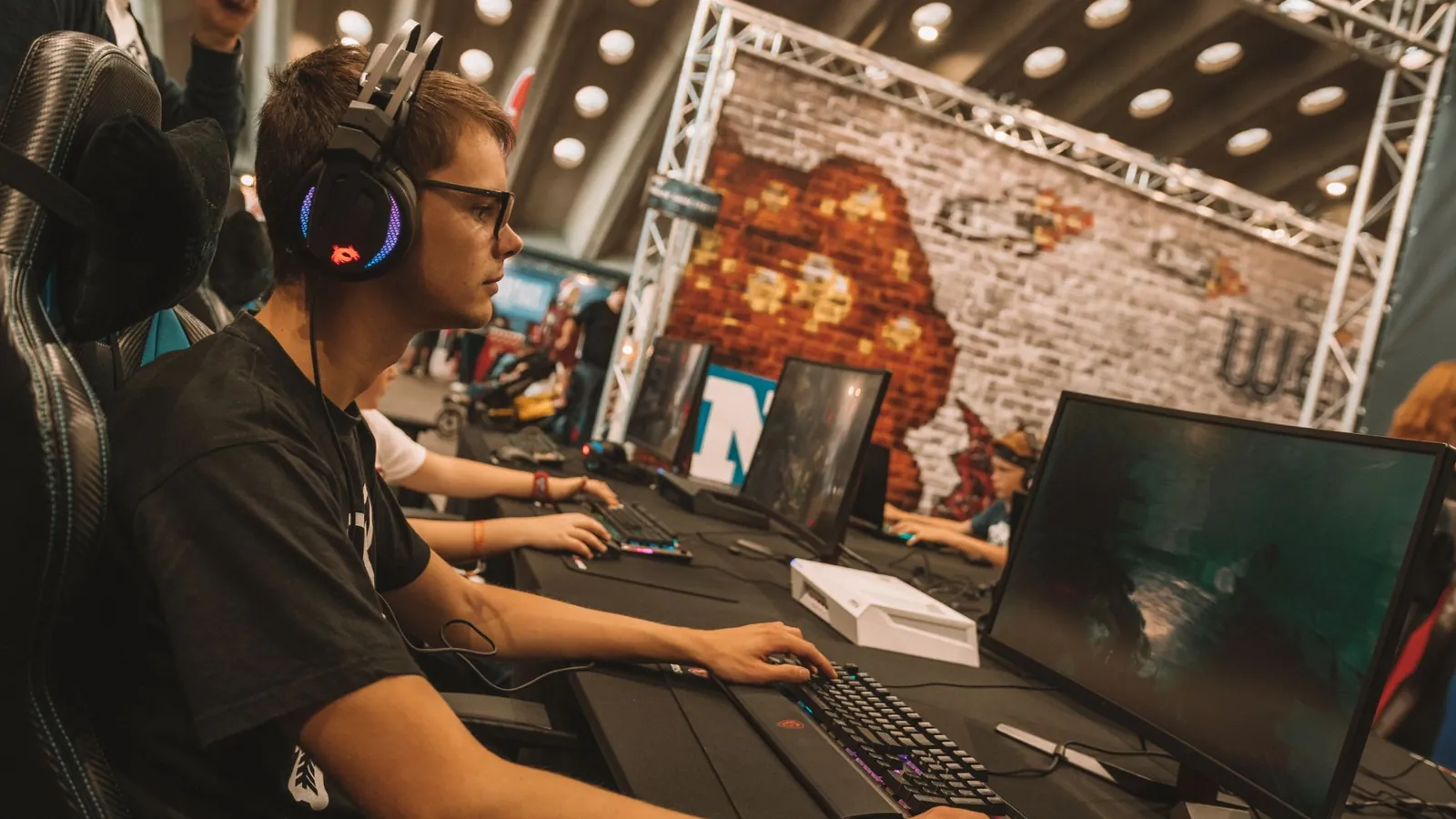
Is Esports a Sport? The Case For and Against — illustrative featured image
# Is Esports a Sport? The Case For and Against A kid in Ohio wins $3 million playing a video game in an arena with 20,000 screaming fans. A marathon runner who trains six days a week finishes 400th in the same city and gets nothing. Both stories ran in the same week last summer. One of them made the evening news, the other didn't. That gap is the whole debate in a nutshell. We're not here to settle it with a slogan. We're here to give you the actual arguments, the physical ones and the philosophical ones, so you can pick a side and defend it at the pub. And because this is GamesNFans and we cover gear as well as games, we'll close with a straight [buying guide](/blog/how-to-choose-a-gaming-headset-what-makes-a-headset-good-for-gaming) for the one piece of kit that matters whether you're grinding ranked or running between wickets: the [best cricket shoes for men](https://www.gamesnfans.com/). Yes, really. Stick with us. ## The two-minute version of the argument Here's the case, stripped down. **Why esports is a sport:** it demands thousands of hours of deliberate practice, elite reaction times, tactical decision-making under pressure, and team coordination. It has leagues, drafts, transfers, doping concerns (Adderall and beta-blockers are both banned in major circuits), and a spectator economy worth billions. If chess counts, esports counts. **Why esports is not a sport:** the physical exertion is minimal. You can compete from a bedroom. The rules change every patch cycle. And the Olympic movement's own charter leans on physicality in a way that a mouse and keyboard struggle to satisfy. Both sides have a point. The problem is that most people arguing online are actually arguing about two different questions: "is it athletic?" and "is it a sport?" Those aren't the same thing. ## The case FOR: skill is skill ### Reaction times that would embarrass a sprinter Elite esports pros post visual reaction times in the 150 to 180 millisecond range. That's faster than the average person by a wide margin, and it's trained, not given. Add sustained attention over a 40-minute map, hand-eye coordination at a level that requires fine motor control most of us can't replicate, and you have a physical skill set. It's just not a cardiovascular one. ### The training load is real A top-tier Counter-Strike or [League of Legends](/blog/blg-signs-flandre-a-new-era-for-the-top-lane) player trains 8 to 12 hours a day in scrims, VOD review, and solo practice. That's a full-time athlete's schedule. Many orgs now employ sports psychologists, physios for wrist and back injuries, and sleep coaches. If the infrastructure looks like a sports team, that's because it is one. ### Competition, structure, stakes Esports has everything a sport needs on the organisational side: a governing body (the IESF), national teams, a transfer market, anti-cheat enforcement, and a doping policy. The International Olympic Committee has already run an Olympic Esports Series. That's not nothing. ### Why esports is important beyond the arena This is the part people skip. Esports is a genuine ladder for kids who don't fit the football or cricket mould. It builds team communication, discipline, and in some cases a career. In regions where a physical sports pathway doesn't exist, a broadband connection does. That accessibility argument is the strongest one in the whole debate, and it rarely gets airtime. ## The case AGAINST: where the definition breaks ### Physicality is in the charter, not just the culture The Olympic Charter and most national sports councils require a physical component. Esports' defenders point to archery and shooting, which are low-exertion. Fair. But those sports still involve handling a physical implement under physical conditions. A controller is a physical implement too, the counter goes. And round and round it goes. ### Patch notes are not rule changes When FIFA changes the offside rule, it happens once a season and applies to everyone. When a game gets patched, the entire competitive meta can flip overnight. That instability is a real problem for anyone trying to build a legacy sport with records that mean something in 30 years. ### The publisher problem This is the big one, and it's why esports should not be in the Olympics yet. No sport in the Games is owned by a private company that can pull the plug. Riot owns League. Valve owns Dota and Counter-Strike. If a publisher decides the competitive scene no longer suits its business, the sport disappears. The IOC can't run a tournament on someone else's IP with someone else's rules and call it Olympic. That's not snobbery, it's governance. ### The health cost is real too Wrist surgeries, back problems, and burnout are common enough that orgs now budget for them. That's not an argument against esports as competition. It's an argument that the physical demands are occupational hazards rather than the point of the contest. ## Where we land We think the honest answer is: esports is a sport, but it is not an Olympic sport, and those are different claims. | Question | Our answer | |---|---| | Is esports a sport? | Yes. Skill, structure, stakes, and training load all qualify. | | Is it athletic in the traditional sense? | No, and it doesn't need to be. | | Should it be in the Olympics? | Not until publisher ownership is solved. The Olympic Esports Games model is the right compromise. | | Should it be taken seriously? | Absolutely. The money and the audience already do. | The "why esports should not be considered a sport" crowd is usually arguing about physicality. The "why esports should be considered a sport" crowd is arguing about competition. Both are right about their own question. The fight is over which question counts. ## Our take: the gear that actually matters Here's where the cricket shoes come in. We get it, it looks like a non sequitur. It isn't. Half the readers who argue about esports also play club cricket, and the same principle applies to both: the gear doesn't make you elite, but bad gear ends your season early. So if you're buying the best cricket shoes for men in 2026, here's what we'd actually put on your feet, ranked by who should buy what. ### 1. Buy this: Adidas 22YDS Boost Around $120 to $140 in the US and UK. The Boost midsole is the closest thing cricket has to a running shoe's cushioning, and the spike configuration works on both grass and synthetic. If you play two or three times a week and your knees are older than your enthusiasm, this is the one. Skip it if you're a pure spinner who wants maximum ground feel. ### 2. Value pick: Puma Spike 24 Roughly $75 to $95. Lighter than the Adidas, slightly firmer underfoot, and the grip is excellent on dry English wickets. This is the shoe for the club player who wants a proper spike without paying flagship money. Skip it if you play mostly on astroturf, where the full spike pattern is overkill. ### 3. Avoid (for now): the $200+ flagship spikes Several brands now sell cricket spikes north of $200. They're beautifully made. They're also aimed at players with a sponsorship and a physio. For a weekend club cricketer, the marginal gain over the Puma is close to zero and the break-in period is brutal. Wait for a sale or buy the Adidas. One rule that applies to both cricket and esports: buy for the surface you actually play on, not the one you wish you played on. ## FAQ **Is esports a sport in the UK?** Sport England recognised esports as a sport in 2021 for funding and governance purposes, though it sits outside the traditional sports framework. The practical effect is access to grants and organisational support, not Olympic status. **Why is esports not in the Olympics yet?** Mainly because the games are owned by private publishers, not by a federation. The IOC has run an Olympic Esports Series and is developing a separate Olympic Esports Games, which is the more realistic path. **Do esports players need physical training?** Yes, and most top orgs now insist on it. Wrist, back, and neck conditioning plus cardio for sustained focus are standard. It looks different from a footballer's training, but the goal is the same: stay healthy enough to compete for years. The argument will keep running. Our advice: pick your side, defend it properly, and don't let anyone tell you the answer is obvious. It isn't. That's what makes it worth arguing about.

Frequently asked questions

Is esports a sport in the UK?

Sport England recognised esports as a sport in 2021 for funding and governance purposes, though it sits outside the traditional sports framework. The practical effect is access to grants and organisational support, not Olympic status.

Why is esports not in the Olympics yet?

Mainly because the games are owned by private publishers, not by a federation. The IOC has run an Olympic Esports Series and is developing a separate Olympic Esports Games, which is the more realistic path.

Do esports players need physical training?

Yes, and most top orgs now insist on it. Wrist, back, and neck conditioning plus cardio for sustained focus are standard. It looks different from a footballer's training, but the goal is the same: stay healthy enough to compete for years. The argument will keep running. Our advice: pick your side, defend it properly, and don't let anyone tell you the answer is obvious. It isn't. That's what makes it worth arguing about.