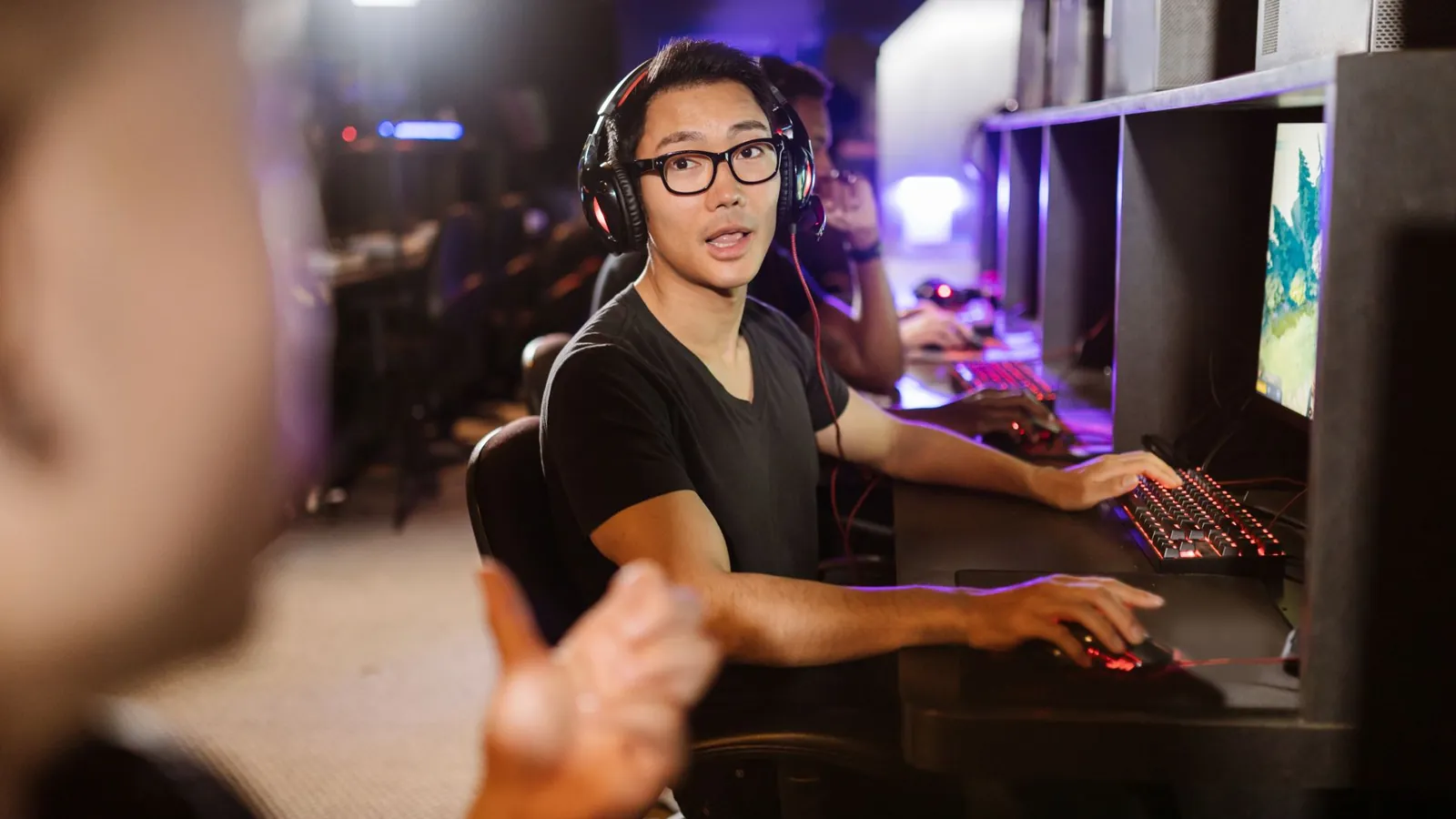
Want to compete for your school? Here is how to esports join a club, what it costs, and why esports in schools is worth the effort.
## The Kid Who Never Made the Football Team Has a Team Now
Walk into a school library in Sheffield or suburban Ohio on a Tuesday at 3:30pm and you will see something that did not exist a decade ago: twelve teenagers, headsets on, a coach with a whiteboard, and a fixture list pinned to the wall. That is [esports in schools](/blog/esports-in-schools-benefits-clubs-and-how-to-get-started). And if you are a student, a parent, or a teacher who has been circling the idea, here is the good news. You can go from curious to competing in about four weeks, and most of the setup costs less than a school football kit.
By the end of this piece you will know how to esports join a team without embarrassing yourself, what a school club actually does, and whether the whole thing is worth the fuss. It is. But the route in is messier than the marketing suggests, so let us walk it properly.
## What Is Esports in High School, and What Is Esports in Middle School?
Strip away the buzzwords and esports is competitive video gaming with structure: teams, fixtures, practice, a coach, a league. What is esports in high school? Usually Rocket League, Valorant, [League of Legends](/blog/esports-prize-pools-in-2026-where-the-money-really-is-lol-dota-2-cs-valorant), Super Smash Bros, or Overwatch 2, played after lessons against other schools. What is esports in middle school? Lighter fare, often Mario Kart or Smash, with a heavy focus on sportsmanship and screen-time limits rather than ladder climbing.
The distinction matters because the two operate on different rules. High school leagues in the US (PlayVS, for instance) run through state athletic associations, which means eligibility paperwork. Middle school clubs are usually informal, run by a teacher who volunteered and now regrets it slightly.
[What is esports](/blog/720hz-gaming-monitor-for-esports-is-it-worth-buying-in-india) club in high school, then? It is the entry point. A club is the on-ramp; the varsity team is the motorway. Most schools start with the club and discover they have a roster on their hands within a term.
## Why Esports in Schools Is a Good Thing (and Where the Argument Gets Thin)
The case for why esports in schools is a good thing is stronger than sceptics admit, and weaker than evangelists claim. Both are true at once.
The strong case:
- **It reaches kids the pitch does not.** The student who cannot sprint for ninety minutes can still read a map, call rotations, and hold composure under pressure. That is a transferable skill.
- **Attendance and belonging improve.** A club gives a disengaged student a reason to be in the building on a Tuesday.
- **It is cheaper than most sports.** A school can kit out six stations for roughly $6,000 to $9,000 in the US, less in the UK where many clubs reuse existing IT suites.
- **Coaching is real coaching.** VOD review, role discipline, communication under stress. Ask any Valorant coach.
Where the argument gets thin: the health claims. Sitting for three hours is sitting for three hours. Schools that do this well build in warm-ups, breaks, and a hard stop. Schools that do it badly create a second sedentary after-school club and call it sport.
## How to Esports Join: Seven Steps From Curious to Competing
Here is the practical route. It takes most people three to four weeks from first enquiry to first fixture. Numbers are in USD and reflect what schools in the US, UK and Europe are actually paying in 2026.
### Step 1: Find out whether a club already exists
Check the school website, the noticeboard outside the IT office, and the PE department. Ask a computing or IT teacher directly. **Result:** you know whether you are joining something or starting something. **What goes wrong:** the club exists but is dormant, with a teacher who left in June. Ask who holds the equipment keys. If nobody does, treat it as a start-up.
### Step 2: Pick your game before you pick your team
Do not turn up to a Valorant trial having played it twice. Choose one title and put twenty hours into it. **Result:** you can hold a conversation about roles and callouts. **What goes wrong:** you pick five games and master none. Every school coach we have spoken to says the same thing: one game, properly.
### Step 3: Talk to the teacher who would sponsor it
In the US you need a faculty sponsor; in the UK and much of Europe you need a staff member willing to supervise and a room booking. Bring a one-page plan: game, proposed practice times, equipment needed, safety rules. **Result:** you have an adult ally. **What goes wrong:** you ask for a varsity team in week one. Ask for a club. Clubs are approved in days; teams take a term.
### Step 4: Sort the equipment question honestly
| Setup | Typical cost (USD) | Notes |
|---|---|---|
| Use existing school PCs | $0 to $500 | Fine for League of Legends; check GPU spec |
| Six console stations (monitors, consoles, peripherals) | $6,000 to $9,000 | Rocket League and Smash run well here |
| Full PC lab refresh | $15,000+ | Only with a budget line and a headteacher onside |
**What goes wrong:** someone donates a pile of mismatched hardware and nobody can run a scrim. Standardise or decline.
### Step 5: Register with a league
In the US, PlayVS covers most states and handles scheduling. In the UK, British Esports runs school competitions. Across Europe, national federations and school sport bodies increasingly list esports alongside football and athletics. **Result:** you have fixtures, which changes everything. **What goes wrong:** eligibility paperwork filed late. Check deadlines in September, not November.
### Step 6: Set the rules before the first practice
Practice length, screen breaks, conduct, and a no-tolerance policy on abuse in voice chat. Write them down. **Result:** parents relax and the club survives its first complaint. **What goes wrong:** one toxic voice channel and the club loses its staff sponsor.
### Step 7: Play your first fixture and review it
Record it if you can. Watch twenty minutes back as a group. **Result:** you learn more from one loss than ten scrims. **What goes wrong:** nobody reviews, nobody improves, and the club quietly becomes a gaming club with a fixture list it ignores.
## Our Take: What We Recommend
If you are a student, start with **[Rocket League](/blog/esports-world-cup-2026-complete-guide-to-events-games-and-how-to-watch)**. It is free, runs on almost anything, has a low mechanical floor and a very high ceiling, and the school league scene around it is the friendliest. If you are a teacher or parent setting up, buy six mid-range gaming PCs rather than ten cheap ones, and put the savings into a decent headset per station. Bad audio ruins team comms faster than a bad frame rate.
For leagues, **PlayVS** in the US and **British Esports** in the UK are the two we would point a newcomer at first. In mainland Europe, check your national federation before signing anything. And if your school will not sanction a club yet, do not force it. Run an unofficial lunchtime group for a term, collect names, and take that list to the deputy head. Evidence beats enthusiasm in every staff meeting we have ever heard about.
## FAQ
**Do I need my own gaming PC to join a school esports club?**
No. Most school clubs provide stations, and that is part of the point: esports in schools should not depend on what a family can afford at home. Ask before you buy anything.
**Is esports in schools recognised as a real sport?**
In the US it sits under state athletic association programmes in many states; in the UK and Europe it is increasingly listed alongside traditional school sport. Recognition varies by region, so check your school's own policy.
**How much time does a school esports club take?**
Two practices and one fixture a week is typical, roughly four to five hours. If a club asks for more than that from a student carrying exam-year workload, push back.
Frequently asked questions
Do I need my own gaming PC to join a school esports club?
No. Most school clubs provide stations, and that is part of the point: esports in schools should not depend on what a family can afford at home. Ask before you buy anything.
Is esports in schools recognised as a real sport?
In the US it sits under state athletic association programmes in many states; in the UK and Europe it is increasingly listed alongside traditional school sport. Recognition varies by region, so check your school's own policy.
How much time does a school esports club take?
Two practices and one fixture a week is typical, roughly four to five hours. If a club asks for more than that from a student carrying exam-year workload, push back.
 GamesNFans