
GamesNFans logo GamesNFans

Esports Injuries: Pro Gamer Health Tips to Prevent Pain

Pro gamers face real physical tolls. Learn expert-backed gamer health tips, posture fixes, and stretches to prevent gaming injuries and stay at your peak.
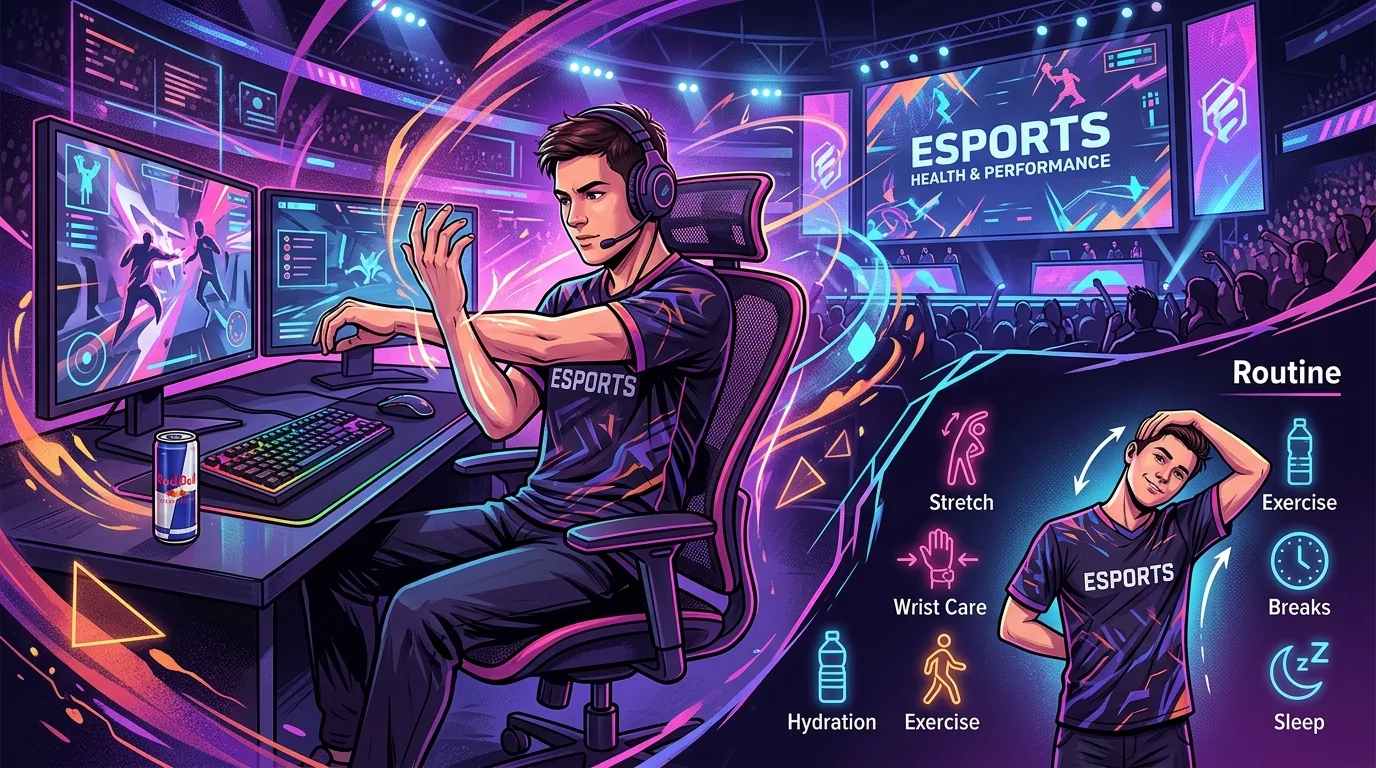
Esports Injuries: How Pro Gamers Stay Healthy and What You Can Learn — illustrative featured image
The final kill cam shows the enemy team collapsing in confusion. But the real drama happened ten minutes earlier, off-stream, when your favorite jungler had to pause the match because his wrist seized up mid-smite. It is a scene playing out more and more often in [competitive gaming](/blog/r6-esports-stage-2-preview-teams-meta-and-what-to-watch), from Seoul to Berlin to Los Angeles. We obsess over K/D ratios and map awareness, but the quietest threat to a pro career isn't a patch nerf. It is a swollen tendon. Professional gaming is brutal on the body. The community is finally talking about it, and the data is waking people up. Studies from the last few years suggest that a staggering number of esports athletes report [musculoskeletal pain](/blog/esports-injuries-how-to-prevent-and-treat-common-gamer-ailments), with the wrist, neck, and lower back taking the heaviest hits. This is not a niche problem. It is the dirty secret of the industry, and it is completely preventable if you know what you are doing. ### The Quiet Epidemic in the Server We need to stop pretending that sitting still for ten hours is "rest." It is a static load. Your body is working overtime to hold your head up, keep your spine stacked, and keep your forearms floating over the desk. The average pro gamer logs more hours in a chair than a long-haul trucker, but without the union, the gym breaks, or the ergonomic cab design. The injuries are specific and predictable. The usual suspects are: - **Wrist and hand issues:** Carpal tunnel syndrome, tendonitis, and the dreaded "gamer's thumb" (De Quervain's tenosynovitis). These come from repetitive micro-movements and death-gripping the mouse. - **Cervical spine strain:** Often called "tech neck." Your head weighs about 10 to 12 pounds. Tilt it forward 45 degrees to stare at a monitor, and the effective weight on your neck spikes to nearly 50 pounds. Do that for six hours. - **Lumbar spine pain:** The curse of the sedentary slouch. Weak glutes and tight hip flexors from sitting all day pull your pelvis out of alignment, and your lower back pays the price. The pros are taking this seriously now. Organizations like T1 and Team Liquid have hired full-time physiotherapists. They are using percussion massage guns, resistance bands, and even red light therapy (yes, really) to keep their rosters on the stage. But you do not need a million-dollar performance staff to fix the basics. ### The Setup Is the First Line of Defense Before you buy another ergonomic mouse or a fancy split keyboard, look at your posture. The best gear in the world cannot save you from a bad foundation. The "gamer lean" (where your nose is practically touching the monitor) is the enemy. Here is the standard we recommend for a healthy setup: | Body Part | The Rule | | :--- | :--- | | **Eyes** | Top of the monitor should be at or slightly below eye level. You should be looking slightly down at the center of the screen. | | **Elbows** | Bent at a 90 to 110 degree angle. Your forearms should rest on the desk or armrests, not hover in the air. | | **Wrists** | Straight. Do not bend them up or down to reach the keyboard. If you have to, lower your chair or raise your desk. | | **Feet** | Flat on the floor. If they do not reach, get a footrest. Do not tuck your legs under the chair. | | **Knees** | About hip-width apart, bent at a 90 degree angle. | If your chair does not support your lower back, roll up a hoodie or buy a lumbar pillow. The goal is to maintain the natural S-curve of your spine. It feels unnatural at first because you have been slouching for years. Give it a week. ### Movement Is the Medicine Here is the part most gamers hate. You cannot stretch your way out of a sedentary lifestyle. Static stretching is fine, but the real cure for esports injuries is strength and blood flow. The muscles in your upper back (the rhomboids and lower traps) have been asleep for years because your chest and front delts are doing all the work. We are not telling you to become a gym rat. We are telling you to do the bare minimum so you do not fall apart at 30. The most effective routine is short, frequent, and boring. Try this between ranked matches or during a death screen: 1. **Chin tucks:** Sit up straight, pull your chin back like you are making a double chin. Hold for 5 seconds. Repeat 10 times. This resets your neck position. 2. **Wall angels:** Stand against a wall, arms bent at 90 degrees, and slide them up and down slowly. This opens up your chest and wakes up your back. 3. **Wrist extensor stretch:** Extend your arm, palm down, and gently pull your fingers toward the floor. Hold for 15 seconds per side. This targets the forearm muscles that cramp up during tense clutch situations. 4. **The "get up" rule:** Every 45 to 60 minutes, stand up. Walk to the kitchen. Refill your water. Look at something 20 feet away for 20 seconds. This is the 20-20-20 rule for your eyes, but the walking part is for your spine. ### Our Take: Gear That Actually Helps There is a lot of snake oil in the ergonomic market. You do not need a $300 vertical mouse, and you definitely do not need those weird finger strengthening grips unless you are a rock climber. But there are a few things we think are worth the money, especially if you are starting to feel that first twinge of pain. - **A quality chair (Herman Miller Aeron or Secretlab Titan):** This is the biggest purchase. The Aeron is the gold standard for a reason, but it is pricey. The Secretlab Titan is a solid middle ground for gamers who want a high back and adjustable lumbar support. Do not buy a "gaming chair" that looks like a racing seat. They are usually too firm and lack proper lumbar curve. - **The Logitech Lift Vertical Mouse:** If you feel any tightness in your wrist, switching to a vertical mouse changes the angle of your forearm from pronated (palm down) to neutral (handshake position). It takes a day to get used to, but it relieves pressure on the carpal tunnel immediately. - **A desk that moves (FlexiSpot or Uplift):** Standing desks are not a gimmick. Alternating between sitting and standing for 20 minutes at a time distributes the load on your spine. Even a cheap manual crank desk is better than nothing. - **The Theragun Mini:** The pros use these on their traps and forearms after long scrim blocks. The mini version is powerful enough to break up knots without being so heavy that you never use it. Use it on low speed on your neck, never directly on your spine. Skip the wrist braces that you wear while playing. They restrict movement and can actually cause more strain. Wear them at night if you have carpal tunnel symptoms, but during play, you want freedom of motion. ### The Mental Side of the Physical Grind We cannot talk about esports injuries without mentioning the burnout that comes with them. Playing through pain is a bad idea. It is how a minor ache becomes a career-ending tear. The pros are learning to speak up when something hurts, and the teams are learning to listen. The old "walk it off" mentality is dying, and good riddance. If you feel a sharp pain, stop. Ice it. Rest for a day. If the pain persists for more than a week, see a physical therapist. Do not ask Reddit for a diagnosis. You would not trust a stranger to fix your car engine, so do not trust one with your tendons. The best players in the world are not the ones who grind the longest. They are the ones who can grind consistently for years. That requires a body that can handle the load. Treat your training like a marathon, not a sprint. The leaderboard will still be there tomorrow, but your joints might not be. ### FAQ **How long should I take a break between gaming sessions to prevent injuries?** Aim for a 5 to 10 minute break every hour. Stand up, move your neck through a full range of motion, and shake out your hands. Set a timer if you have to. The break is non-negotiable. **Can I game with wrist pain, or should I stop completely?** If it is a dull ache, try adjusting your setup and using a vertical mouse first. If it is a sharp, shooting pain or numbness, stop immediately. Playing through nerve pain is how you end up in surgery. Rest for a few days and see a professional if it does not subside. **Are hand grips or stress balls good for preventing gamer injuries?** They are fine for warming up, but they do not prevent the most common injuries. They build grip strength, which is not the issue. The issue is repetitive motion and poor posture. Focus on stretching your forearm extensors and strengthening your upper back instead. ## Related on this site - [The Hidden Toll of Pro Gaming: Injury Prevention Tips for Indian Esports Athletes](/blog/the-hidden-toll-of-pro-gaming-injury-prevention-tips-for-indian-esports-athletes) - [720Hz Gaming Monitor for Esports: Is It Worth Buying in India?](/blog/720hz-gaming-monitor-for-esports-is-it-worth-buying-in-india) - [From Bed to Esports Star: A Parent's Guide to Supporting Your Gamer](/blog/from-bed-to-esports-star-a-parent-s-guide-to-supporting-your-gamer)

Frequently asked questions

How long should I take a break between gaming sessions to prevent injuries?

Aim for a 5 to 10 minute break every hour. Stand up, move your neck through a full range of motion, and shake out your hands. Set a timer if you have to. The break is non-negotiable.

Can I game with wrist pain, or should I stop completely?

If it is a dull ache, try adjusting your setup and using a vertical mouse first. If it is a sharp, shooting pain or numbness, stop immediately. Playing through nerve pain is how you end up in surgery. Rest for a few days and see a professional if it does not subside.

Are hand grips or stress balls good for preventing gamer injuries?

They are fine for warming up, but they do not prevent the most common injuries. They build grip strength, which is not the issue. The issue is repetitive motion and poor posture. Focus on stretching your forearm extensors and strengthening your upper back instead.